The Faribault Paver Guide

Plan a Paver Patio That Makes Sense for Minnesota.

Understand concrete paver materials, site preparation, drainage and budget before you compare installation proposals in Faribault and nearby towns.

Serving Faribault, Northfield, Owatonna, Dundas, Kenyon, Medford and Waseca.
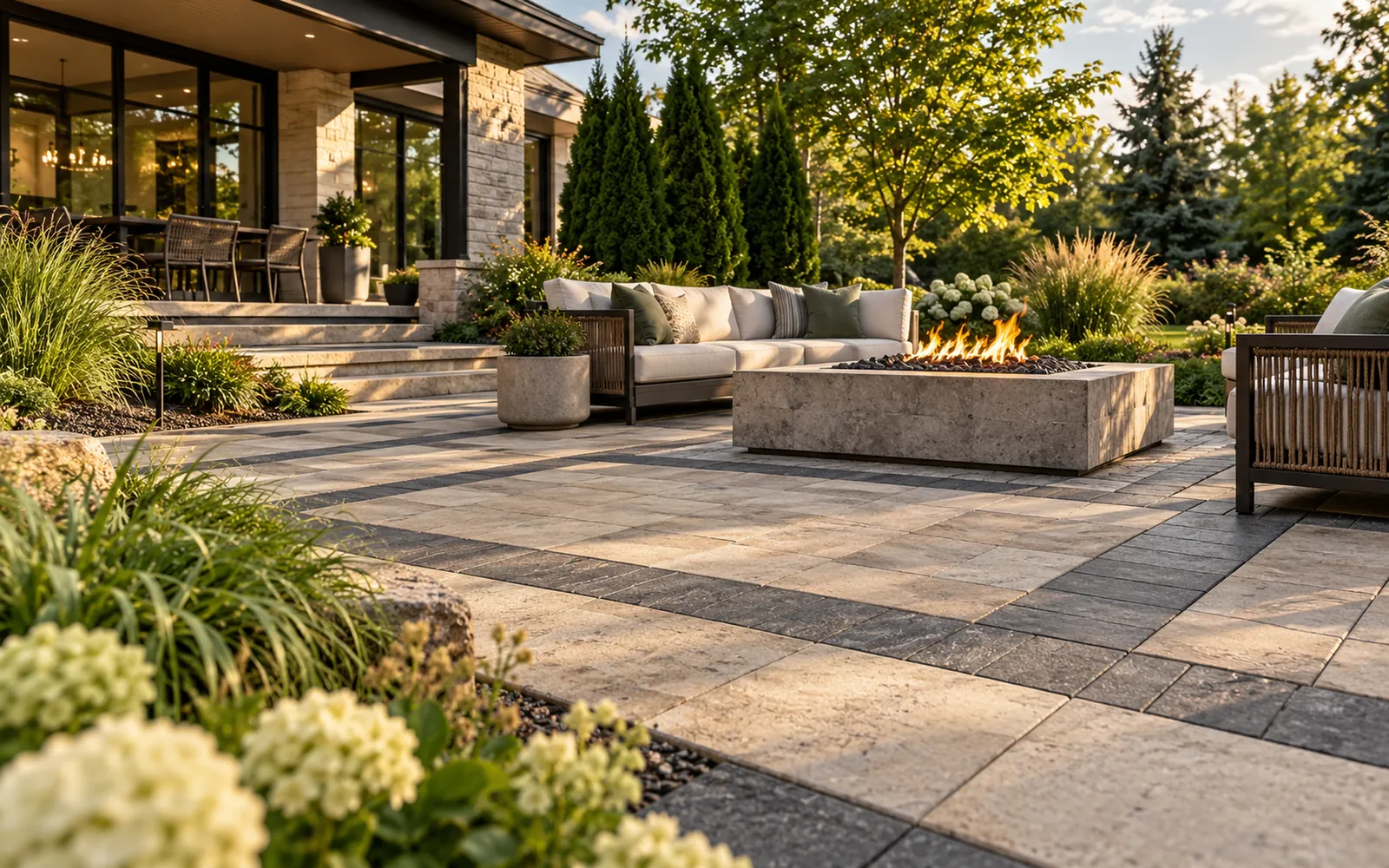
Concept view of a residential patio in limestone and charcoal concrete pavers with a charcoal border, a low fire feature, lounge seating and evergreen planting beside a contemporary home
Illustrative concept — AI-generated illustration for planning purposes; not a completed Concrete Pavers Guide project.

Choose your project

Start with what you are building

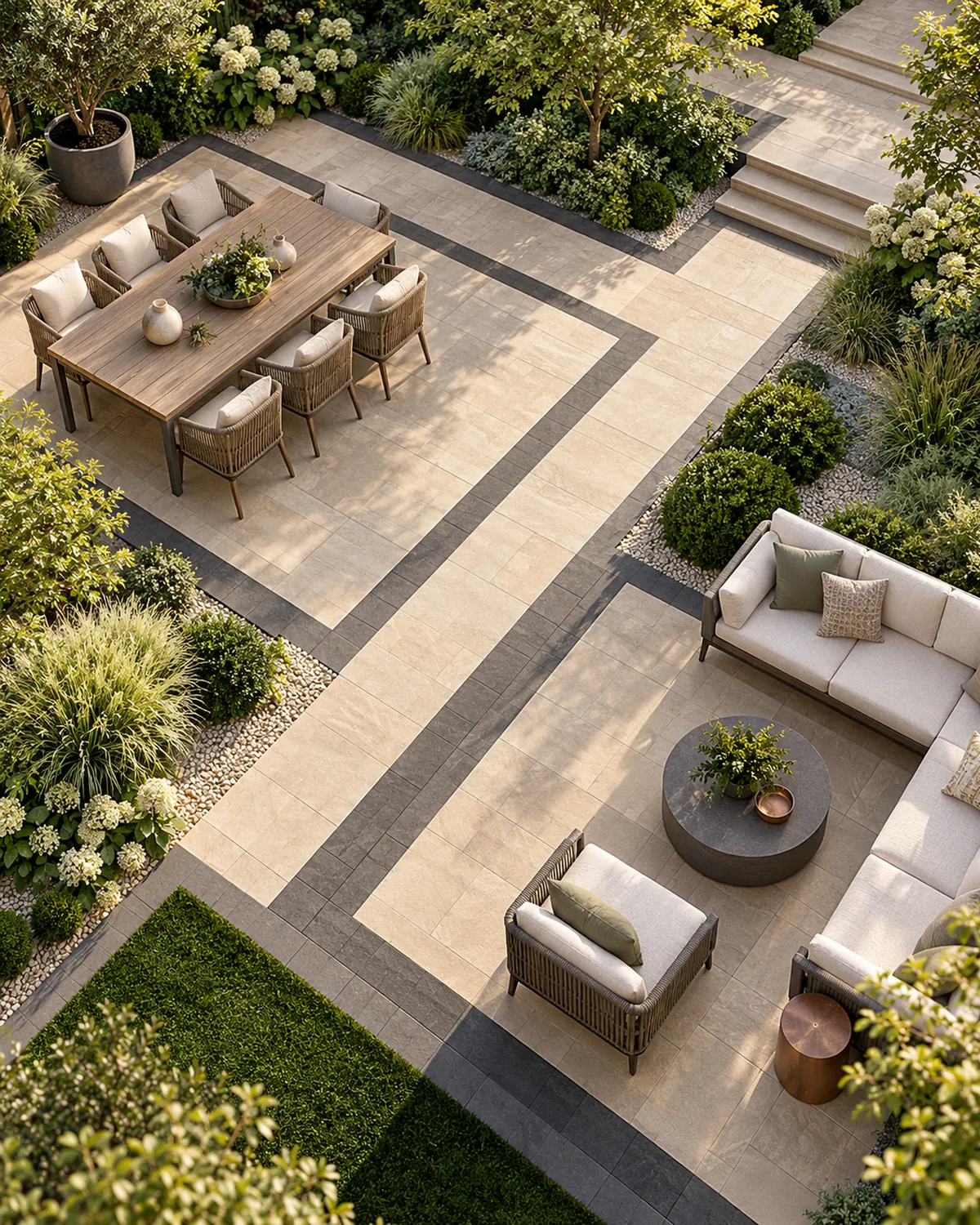
Bird's-eye concept of a paver patio with a dining zone and a lounge zone, each framed by a charcoal border and joined by a paved path and steps

01 · Paver patios

Layouts that fit how you live outside

Dining, lounging, paths and steps — sized from furniture and walking room, not from a template.

Plan your patio
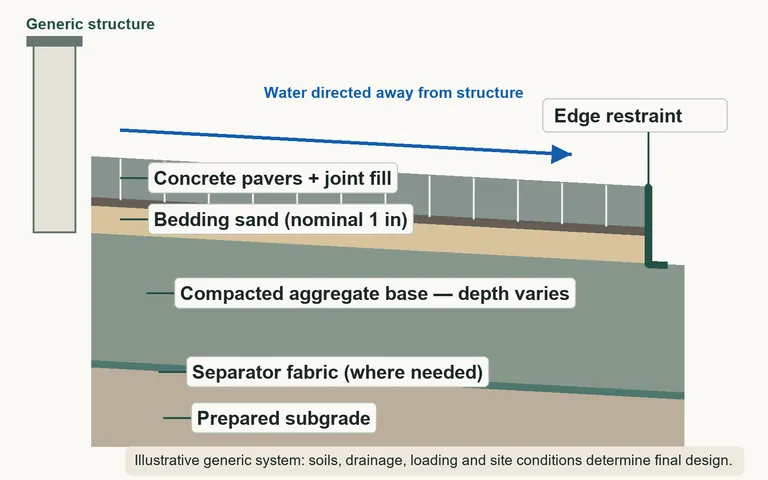
Cutaway diagram beside a building wall: concrete pavers with joint fill on top, then bedding sand, a compacted aggregate base, separator fabric where needed and prepared subgrade. An edge restraint at the outer paver edge sits on the base, which extends past it. The surface falls away from the wall and an arrow shows water directed away from the structure.

02 · Installation

What goes underneath decides how it ages

Subgrade, base, bedding, edges and drainage — and the questions to ask about each.

Read the installation guide
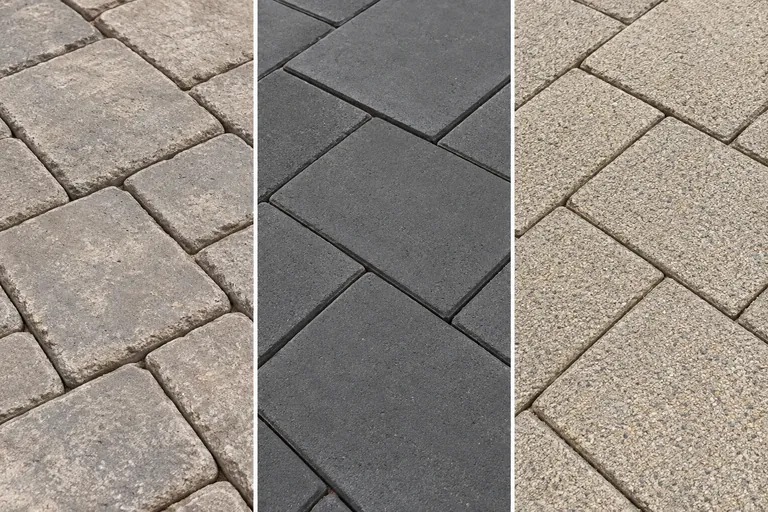
Three illustrative concrete paver surface finishes side by side: tumbled, smooth dark charcoal and fine-textured light gray

03 · Concrete pavers

Finish, thickness and pattern, matched to use

How units differ for patios, walks and drives, and what to ask a supplier.

Compare paver options
Images: Illustrative concept — AI-generated illustration for planning purposes; not a completed Concrete Pavers Guide project.
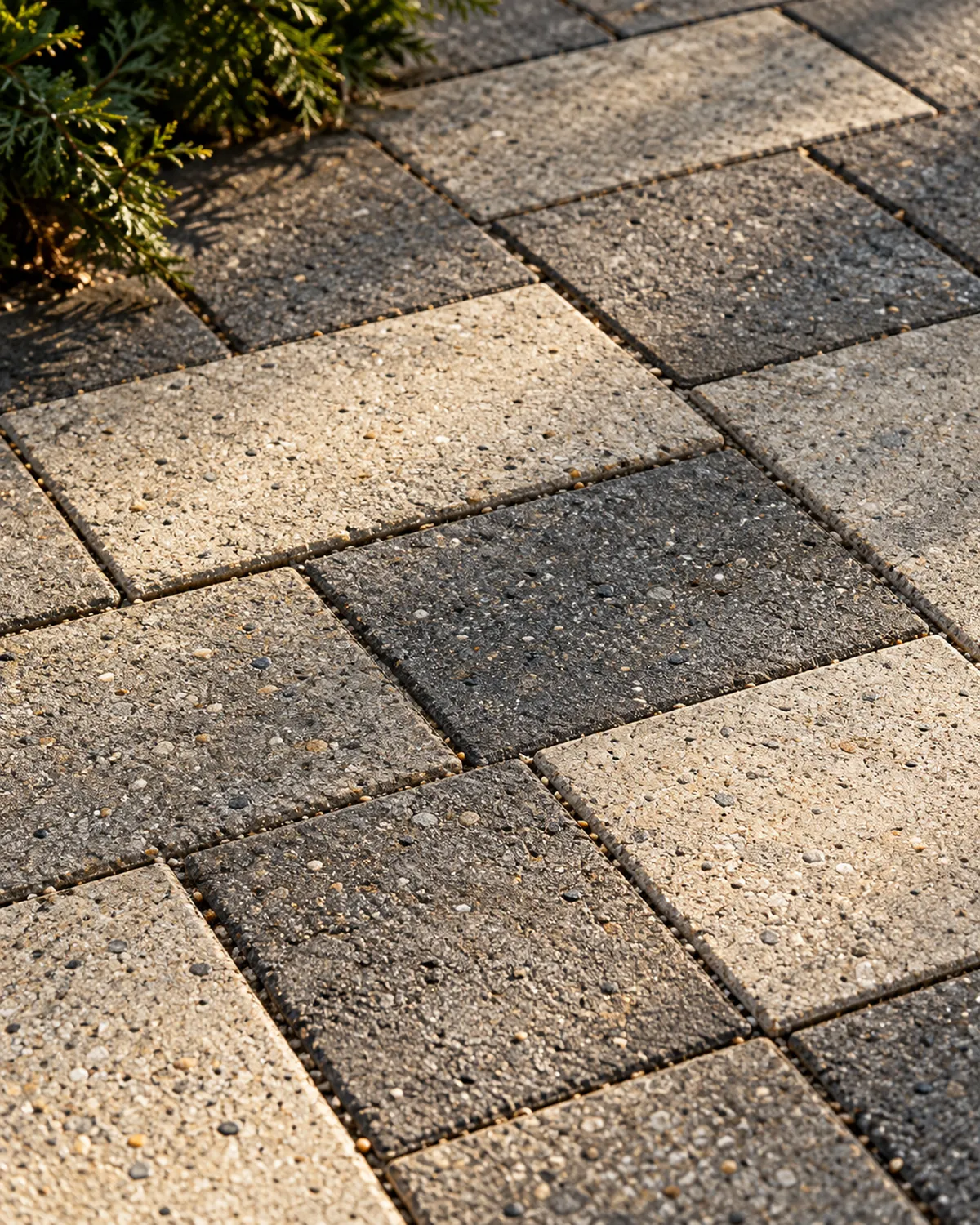
Close view of limestone-gray and charcoal textured concrete pavers in low side light, showing narrow sand-filled joints
Illustrative concept — AI-generated illustration for planning purposes; not a completed Concrete Pavers Guide project.

Below the pattern

Built for the way Minnesota weather behaves

Water expands as it freezes. Whether a patio stays flat depends less on the paver you pick than on three things you will not see once it is finished.

  1. What is underneath

    Cause Soft subgrade left in place, or a base too thin for the soil.

    Result Settling and low spots after a few freeze–thaw seasons.

    Ask “What did you find when you dug, and why this base thickness?”

  2. Where water goes

    Cause A surface pitched toward the house or into a low corner.

    Result Ponding, winter ice and moisture at siding and doors.

    Ask “Where will the water go? Can you show me the grading plan?”

  3. What holds the edge

    Cause A missing or loosely anchored edge restraint; joints washing out.

    Result Pavers creep outward, joints open and weeds move in.

    Ask “Which restraint, anchored how, and which joint material?”

42 inches is a footing depth, not a patio base. Minnesota's code figure for most of southern Minnesota applies to footings (Code Pass, Minn. R. 1303.1600); base thickness depends on soil, drainage and use.

See every layer and what to ask

Material decision

Choose the surface before you choose the installer

The surface decides how a patio looks, how it is repaired and roughly where it sits in a budget. There is no blanket winner — each trades upfront cost against repair and appearance.

  • Interlocking units

    Concrete pavers

    How it looks
    Widest choice of shapes, colors and laying patterns
    When ground moves
    Units can shift and be lifted and reset
    Repairs
    Relay the affected area; matching units help
    Upfront cost
    Higher than a basic slab
  • Continuous slab

    Poured concrete

    How it looks
    Plain; stamping and color add options and cost
    When ground moves
    More likely to crack
    Repairs
    Patches and replacements usually show
    Upfront cost
    Usually lowest for a basic slab
  • Natural material

    Natural stone

    How it looks
    Unique texture and variation by stone type
    When ground moves
    Depends on the stone and how it is set
    Repairs
    Relaying is possible; depends on the setting method
    Upfront cost
    Usually highest of the three

General trade comparison. One national guide lists installed ranges of $8–$16 per sq. ft. for concrete pavers and $12–$30 for natural stone (HomeServe, checked Oct. 25, 2026). Compare concrete paver options

Budget

What really changes the price?

Square footage is only the start. Six things move a quote more than anything else — and they are exactly where two proposals for the "same" patio tend to differ.

Read the full cost guide
  1. Size and layoutSmall patios carry fixed costs; curves and borders add cutting.
  2. Excavation and baseRemoving an old surface, digging and the base your soil needs.
  3. DrainageGrading the surface so water leaves the house — sometimes extra work.
  4. MaterialPaver type, finish, thickness and border units.
  5. AccessNarrow side yards and slopes slow equipment and labor.
  6. Edging and patternRestraint type, plus herringbone or mosaic cutting time.

Published installed ranges per sq. ft. — national and Midwest sources, not Faribault prices

  • $8–$16HomeServeNational consumer guide, 2026 · concrete pavers
  • $15–$352 Men ConcreteContractor guide, 2025 · all paver types
  • $30–$40Elevate OutdoorMidwest & Northeast contractor, May 2026

Before you hire

Know what to ask

Ask every contractor the same six questions, and get the answers in the written proposal.

  1. Base preparation

    What they observed about your soil and water, and the base type and thickness they propose.

  2. Drainage and grading

    Where water will go, and how the finished height meets door thresholds and steps.

  3. Edge restraint

    Which restraint is used and how it is anchored into the base.

  4. Scope

    Removal of the old surface, excavation, hauling and disposal — included or extra?

  5. Cleanup and access

    How equipment reaches the yard, and who repairs lawn or landscaping damage.

  6. Warranty and follow-up

    What the contractor's written terms cover if settling or joint loss appears later.

More projects

Walkways, driveways and repairs

  • Paver walkwaysRoutes, width, steps and winter traction for front entries and garden paths.
  • Paver drivewaysThicker units, deeper bases and herringbone patterns built for cars and plows.
  • Repair & restorationSunken, rocking or weedy pavers: find the cause, then choose a spot repair or rebuild.

Homeowner guides

Local context

Written for Faribault and six nearby communities

Primary focus Faribault

Also covered Northfield · Owatonna · Dundas · Kenyon · Medford · Waseca

Project calls are taken for Faribault and all six nearby communities. Mention your address and the work you have in mind when you call.

See community details

How it works

From plan to proposal

  1. Plan your project. Settle the use, layout and surface with the guides, and note your questions.
  2. Call (877) 405-7315. Talk through your patio or paver installation with a local paver professional.
  3. Get a written proposal. The contractor assesses your site, sets the price and does the work under their own agreement with you.

Ready to Start Your Paver Project?

Call (877) 405-7315 to discuss your patio or paver installation needs.

Two common questions

Pavers or poured concrete: which handles a Minnesota winter better?

Neither is failure-proof. Interlocking pavers can shift slightly with frost and be lifted and reset, while a rigid slab is more likely to crack and its repairs usually show. Either surface depends on the base and drainage under it; see how concrete pavers compare.

Do I need a permit for a patio in Faribault?

Our research did not find a Faribault or Rice County permit rule for patios, so we cannot say either way. Check with the City of Faribault before work starts, and confirm in writing whether your contractor handles any permit.